About
A road, and a book
From Agra to a writing desk in New Jersey, by way of two decades in the corporate world.
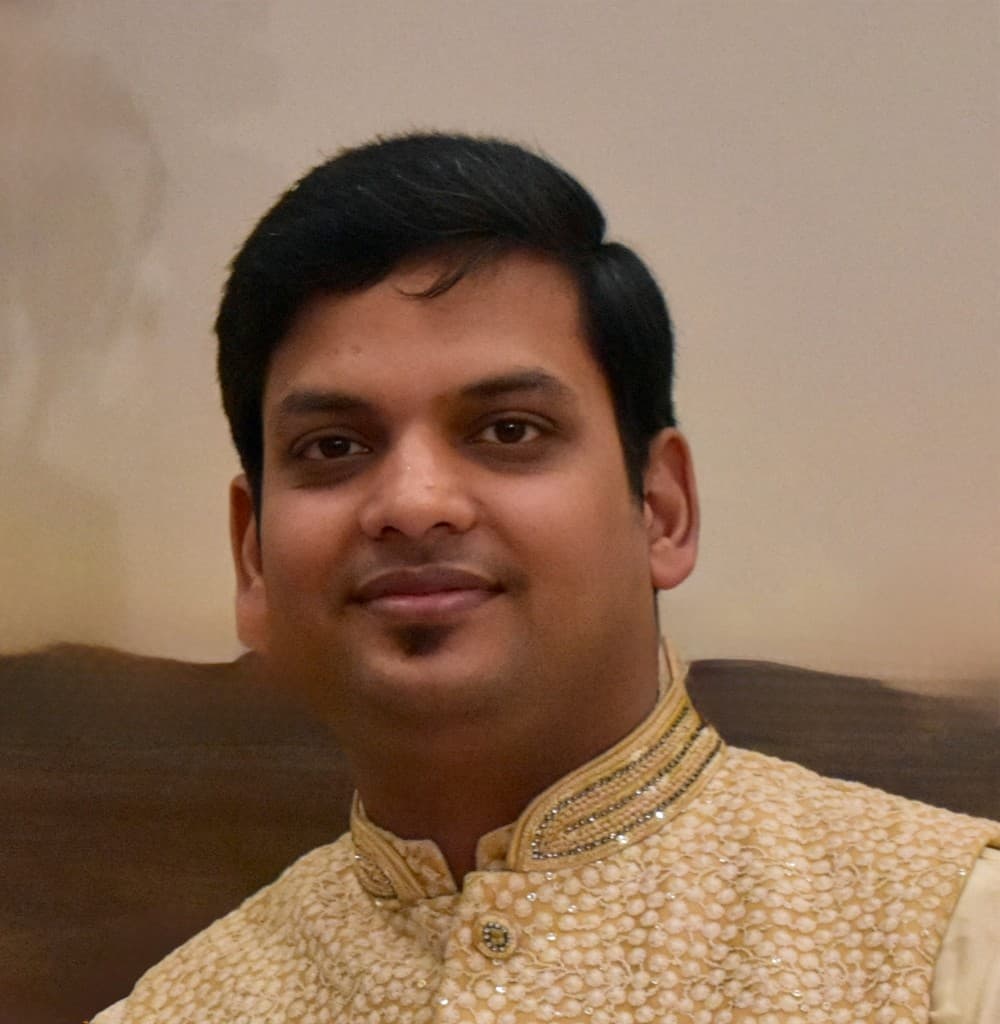
It happens on ordinary days, usually without warning. A meeting runs long, a deadline slips, someone raises their voice over something that will not matter in a year, and somewhere underneath the noise, an old shape surfaces. A flood. A disguise. A god who waits centuries before deciding it's time to act. I used to notice these moments and let them pass. Now I write them down.
I grew up in Agra, in a home where the old Hindu stories were simply part of daily life. My parents told them the way parents tell most things, not as lessons but as stories worth telling. The Ramayan and the Mahabharat came at us from every direction: read aloud, watched on TV, retold at dinner, argued over on lazy afternoons. Nobody sat me down and taught me the ten avatars of Vishnu as a system. They arrived the way most things from childhood do, sideways, in fragments, through parents and television and years of hearing the same stories told slightly differently each time. I didn't know yet that I'd spend two decades circling back to them.
Those two decades were spent in corporate strategy, the world of frameworks, quarterly targets, and rooms full of very smart people solving problems that kept returning in slightly different shapes. It was there, oddly, that the old stories started making a different kind of sense. A crisis of trust looked like Matsya, warning of a flood no one else could see. A system straining under its own weight looked like Kalki, waiting at the edge of an age for its ending. I didn't set out to find these parallels. They found me, repeatedly, in meeting rooms that had nothing to do with hindu traditions.
For a long time I kept the two worlds separate, the professional one where I made a living, and the older one that lived only in memory. What finally broke that separation wasn't a single dramatic moment. It was the slow, stubborn realization that the ten avatars were never meant to be read one at a time. They're a system, ten answers to ten kinds of collapse, meant to work together the way a body's organs do. Once I saw that, I couldn't unsee it, and I couldn't keep it to myself either.
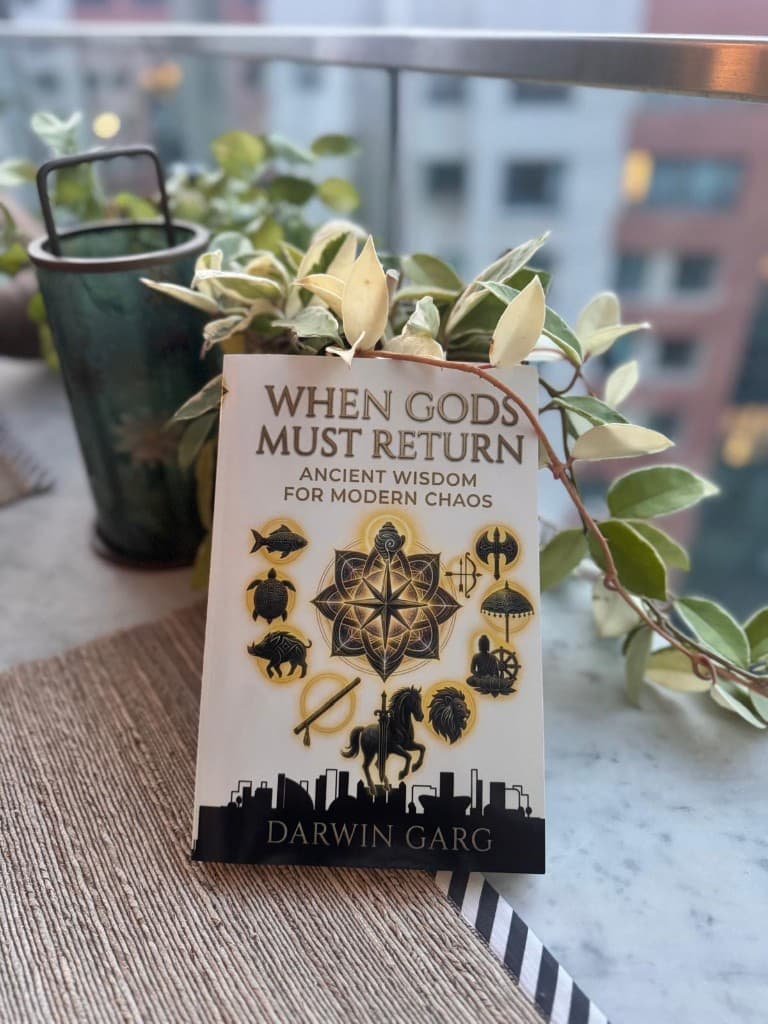
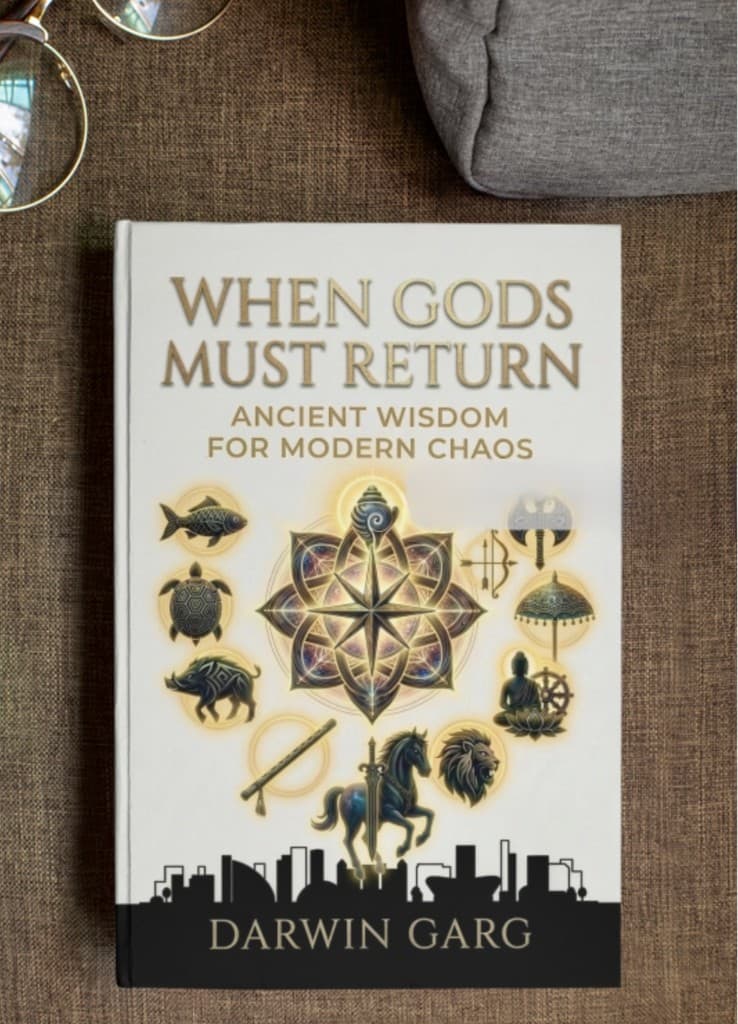
When Gods Must Return is what came out of that realization. Ten stories about ordinary people meeting extraordinary pressure, each one carrying an old pattern without ever naming it.
I live in New Jersey now, a long way from Agra, still working the strategy job by day. The book is out in the world, finding readers across countries I've never visited. If any of this sounds familiar, if you've felt an old shape surface under the noise of an ordinary day, you're exactly who I wrote it for.
How the book began
I never thought I'd be an author. When my wife suggested I write a book, I brushed it off. What are you saying, I told her. We don't write books. Authors write books.
But the idea does something to you once it's been said out loud. I didn't act on it, and I didn't quite forget it either. What I did start doing was paying attention. At gatherings with friends, whenever our ancient history came up, I'd find myself talking. Then I'd look up after fifteen or twenty minutes and realize I was the only one who was still talking. Everyone else was only listening. It happened again. And then again.
That was the part I couldn't ignore. The things I learned growing up weren't were not known to everyone by default. People were unaware of our Hindu traditions and our stories of Gods.
It was then, that I thought I should try putting it down in some form to people to read. That thought started this book.
In photographs
A few moments along the way
Beyond the book
Most of my week still belongs to the corporate strategy job. I haven't left it, and I don't plan to. The two feed each other more than people expect. The work keeps me in rooms where real problems get argued over, and those rooms are where I keep finding the patterns I write about.
There isn't a second book. What I want right now is simpler and harder: to get this one into more hands. A book only does its work when someone actually reads it, and that part doesn't happen on its own. So a lot of my time goes into finding readers, one conversation at a time.
The one thing I am considering is a Hindi translation, possibly next year. These stories came to me in a house where they were told in Hindi, and there's something unfinished about them existing only in English. The rest of the time, I'm with my family. It's most of what matters.