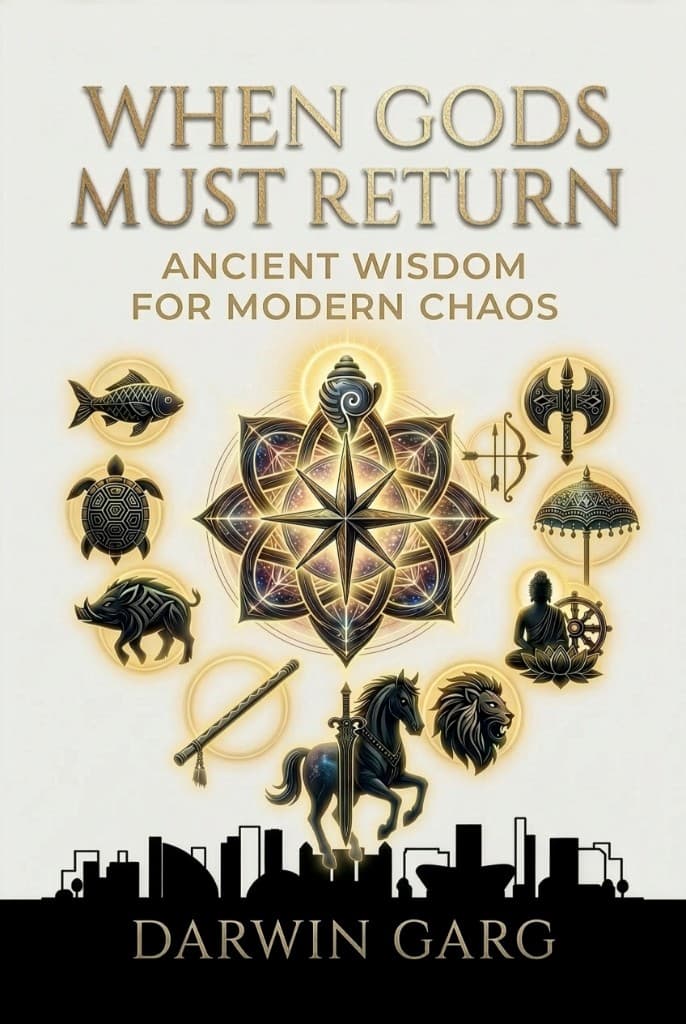
Every book announces itself before it explains itself. The opening is a contract with the reader: here is the world we are entering, and here is the cost of staying.
When Gods Must Return opens not with a thesis but with a pressure — the sense that something has broken in how we name our problems. We still speak as if misinformation were separate from loneliness, as if climate dread were unrelated to the collapse of trust, as if mental health were a private matter while power concentrates in public.
“The world isn't facing one crisis. It's facing ten — simultaneously.”
Naming the flood
The first pages refuse the comfort of a single villain. There is no one institution to blame, no one ideology to defeat. Instead, the book names a weather system — ten forces that arrive together, amplify each other, and ask different kinds of courage from the people living inside them.
- The flood of information that outruns discernment.
- The erosion of mental health in a world that never stops performing.
- The climate crisis that makes every future feel conditional.
- The concentration of power behind polite surfaces.
To name ten crises is not to multiply despair. It is to refuse the smaller lie that one clean answer will be enough. The opening lines are an invitation to read with your whole attention — not for escape, but for orientation.